Transforming Branch Banking: Unifying service workflows
OCBC Bank • Jun 2022 – Aug 2024
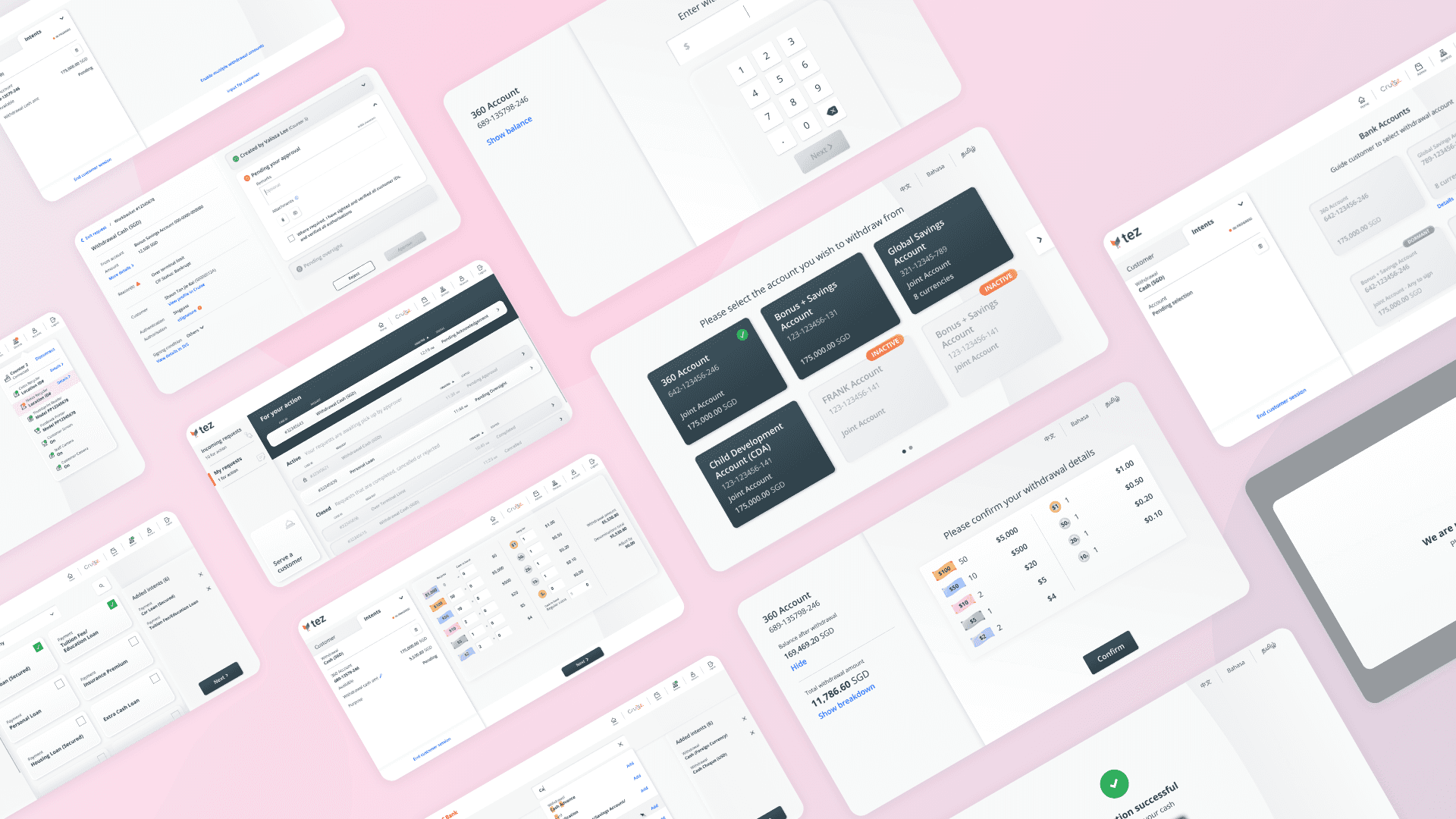
OCBC was the last major bank in Singapore without digitised branch processes. Over 40 transaction types were still handled manually. Slow, error-prone, and overdue for a fix.
iMPACT
SGD $2M
Operational savings
40
workflows digitised
33
branches
MY ROLE
Lead designer
End-to-end design, from discovery to UI delivery. Managed 3 external agency designers. Led stakeholder alignment across multiple banking functions, and conducted research with customers and branch staff alongside 2 UX researchers.
TEAM
Product owners, engineering, UX research, agency designers.
CONTEXT

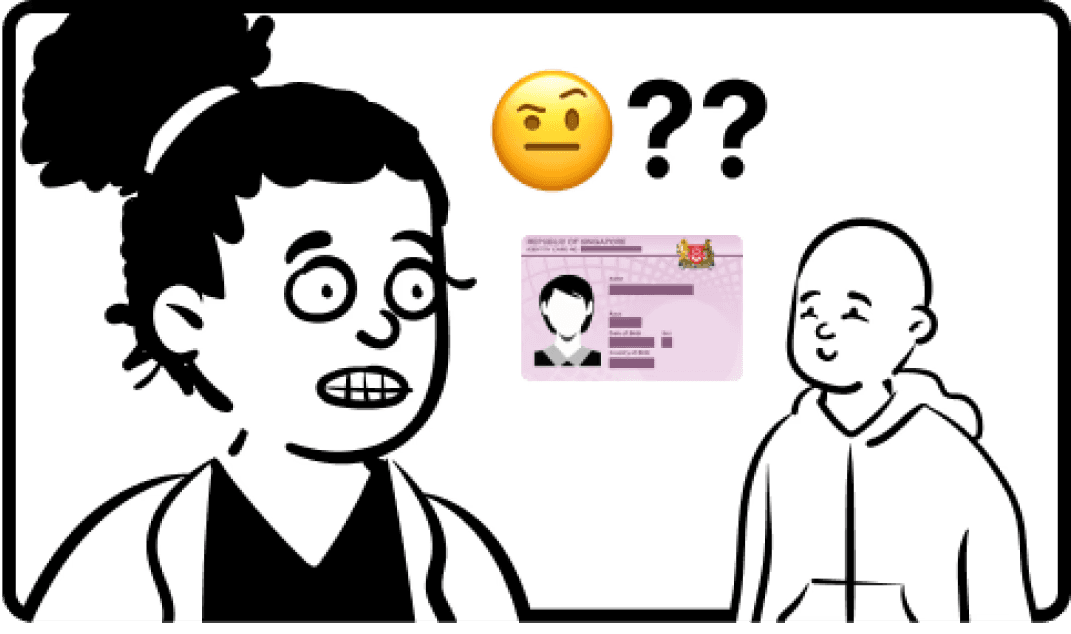
Customers are upset with teller inaccuracies.
Staff errors incur substantial annual branch costs.
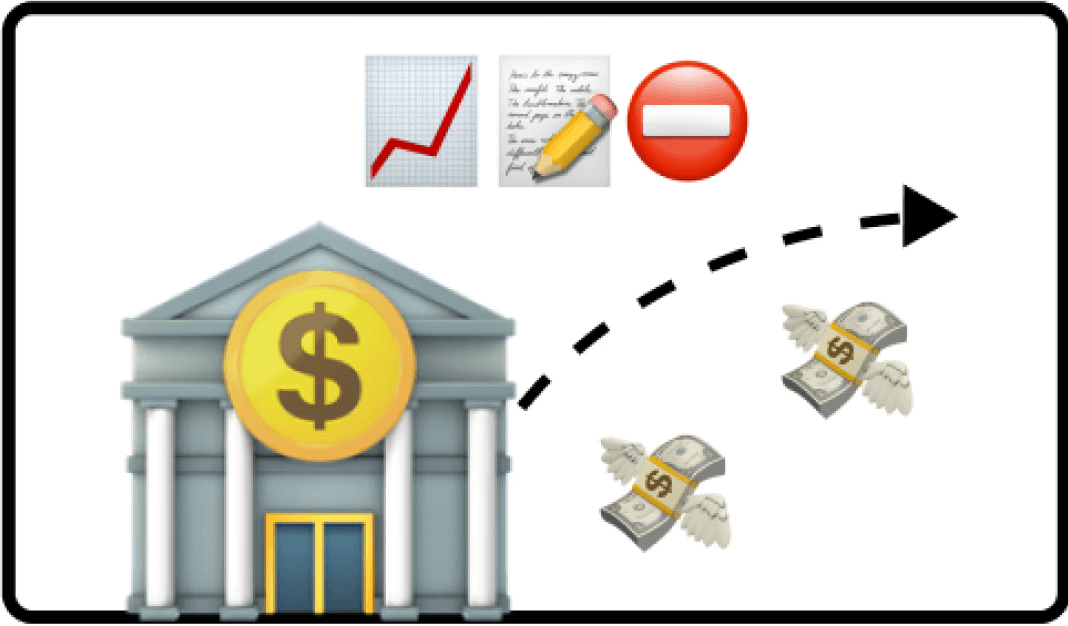
Manual verifications heighten exposure to risks and fraud.
KEY FINDINGS
Customers weren't just tolerating branch visits, they were actively choosing them.
It wasn't just about digitising workflows. It was about reducing staff errors without removing the human presence customers were coming in for.
Staff experience high cognitive load daily
Tellers memorise 6-digit codes to start transactions and manually interpret handwritten customer responses.
Learning: The system needs to carry the cognitive load, not the teller.
Staff experience a lack of support
Onboarding covers basic transactions. Actual branch operations are significantly more complex.
Learning: The design needs to provide ongoing guidance.
Customers still want tellers
Online banking and ATMs were available, but having a teller in the loop felt safer, even if it meant waiting longer.
Learning: We aren't replacing human interaction. We are redesigning around it.
How might we digitise the process without losing the human presence that customers actually value?
CONCEPTUALIZATION
A duo-screen counter model
One for the customer, one for the teller — so customers could actively participate in their own transactions rather than handing everything over.
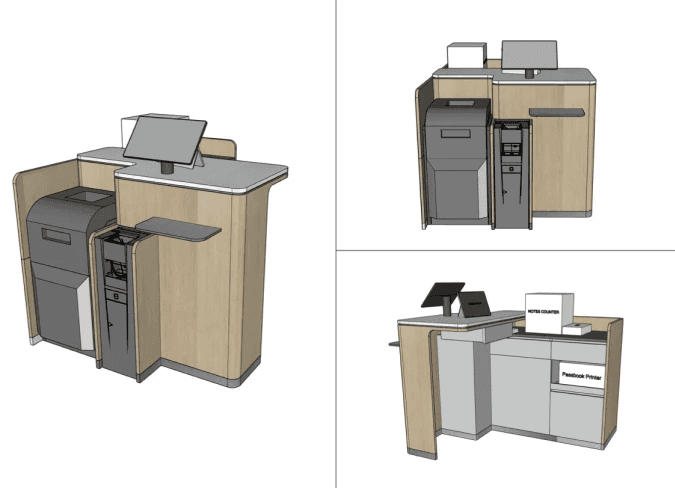

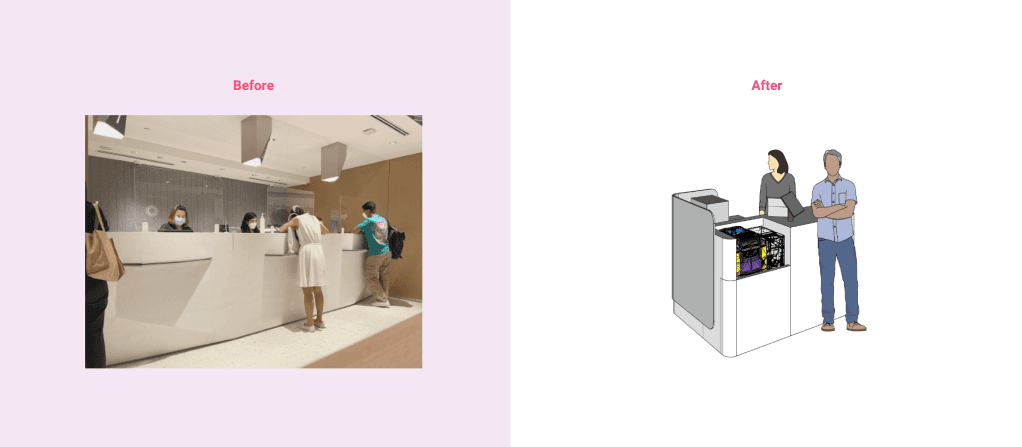
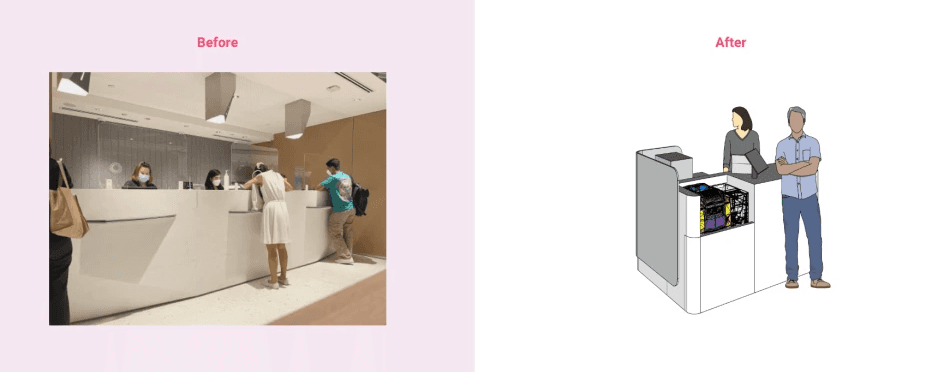
New model — customer and teller side by side, versus the old setup where the teller sat behind a counter.
VALIDATION
Testing validated the concept and surfaced constraints.
Safety first
Customers valued security measures. Face verification and 2FA gave them confidence.
Tellers aren't optional
Customers still relied on tellers to guide them. Self-service alone wouldn't have solved it.
Simplicity > features
Scrolling and long content were breakpoints, especially for older users.


SOLUTION
A new branch banking model enabling customer-initiated digital transactions with teller guidance.
Customers do more. Tellers remember less, and guide rather than execute.
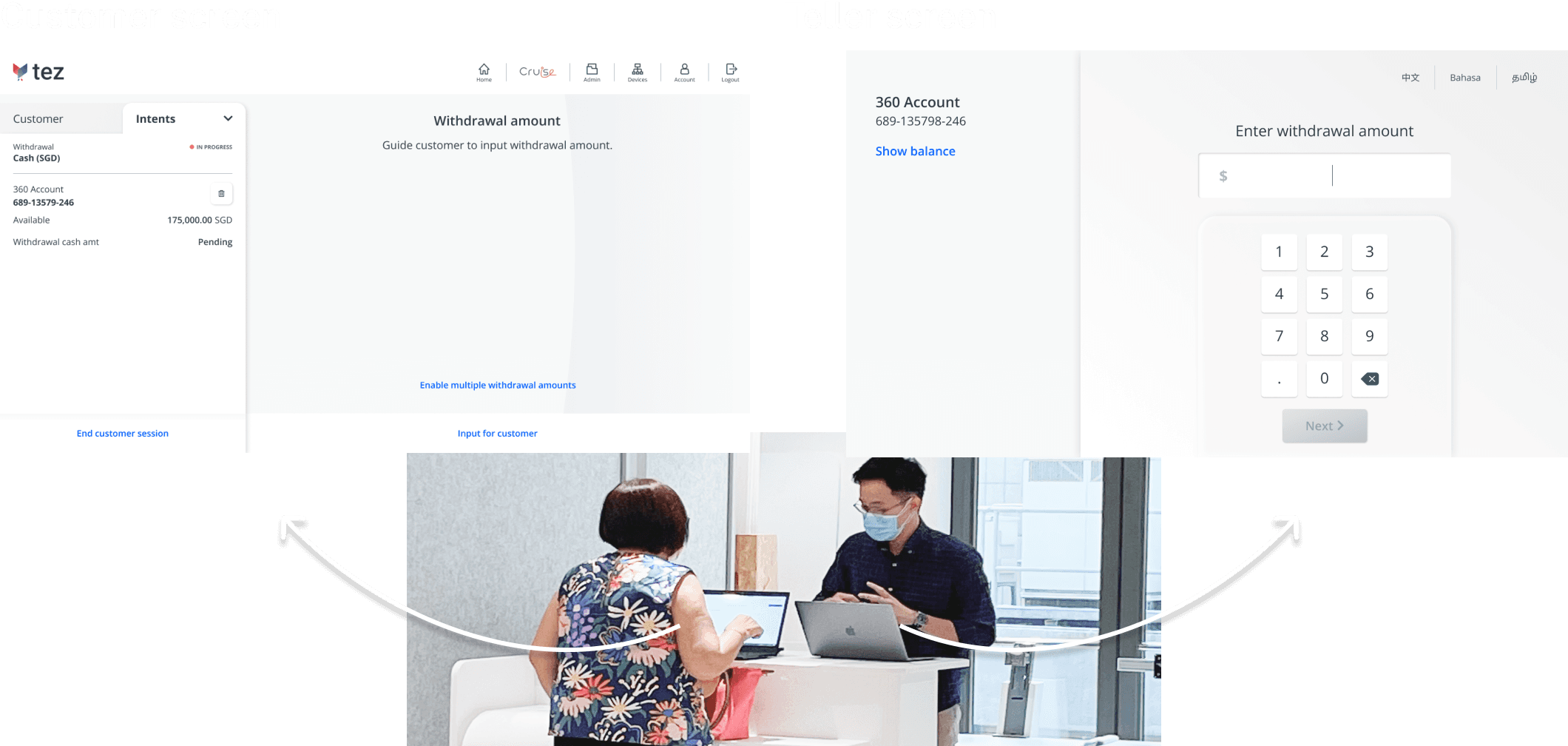
New model — Customer screen on the left, teller screen on the right. Both active simultaneously.
01.
Shifting responsibilities to customers
Customers select options and enter details themselves. The teller guides rather than execute.

02.
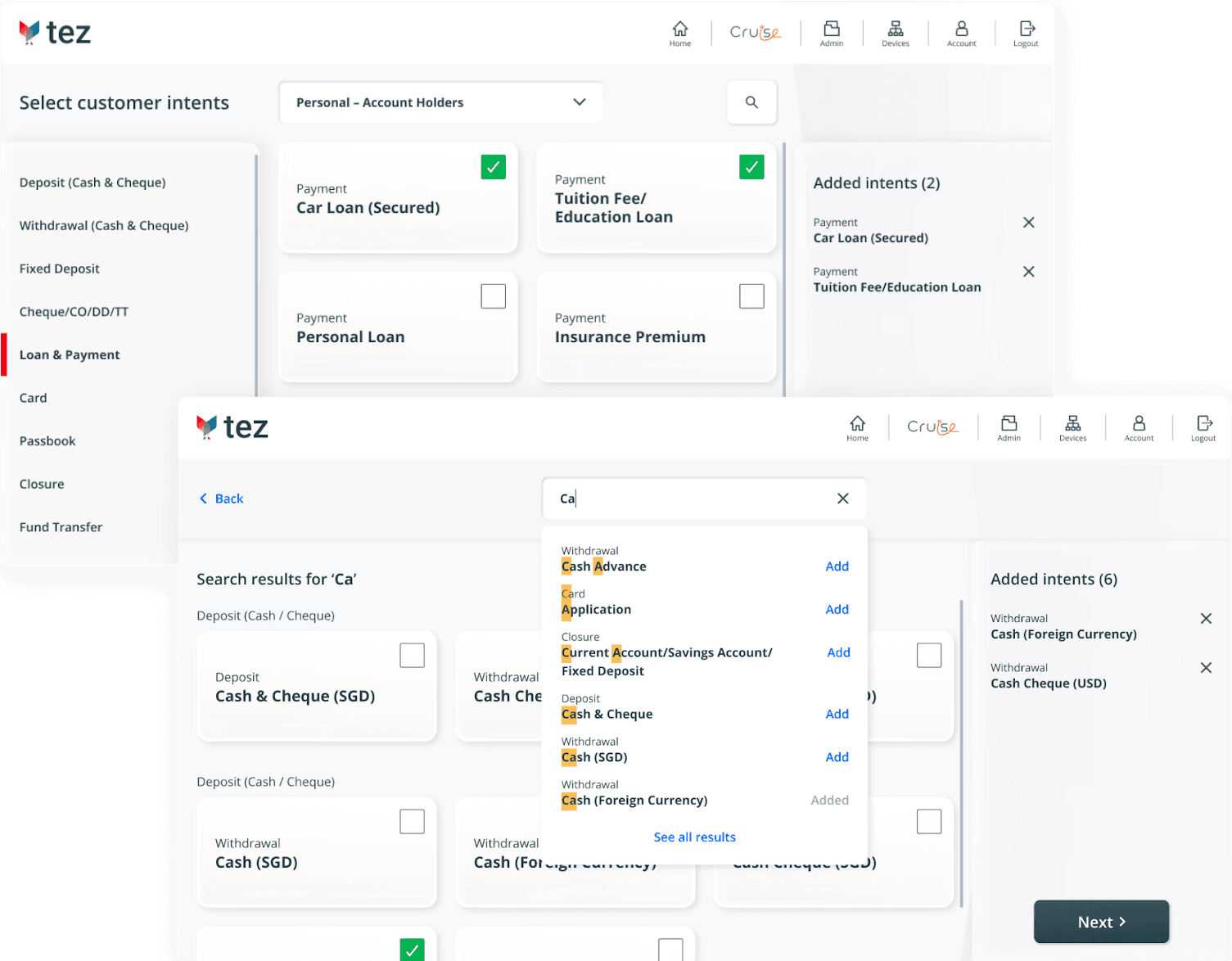
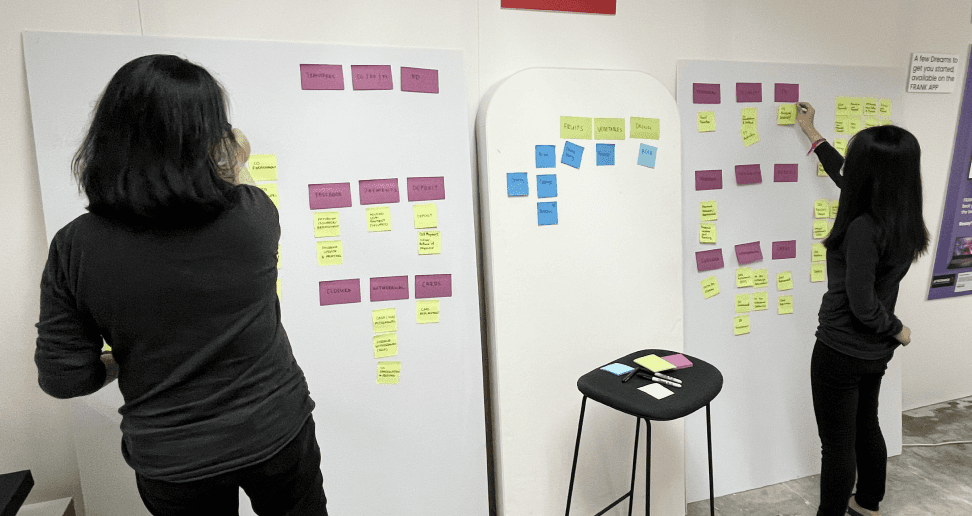
Replacing memory with structure
Card sorting with young and seasoned branch staff shaped a menu of 40+ transactions, intuitive enough to navigate without memorising transaction codes. A search feature was added too.
03.
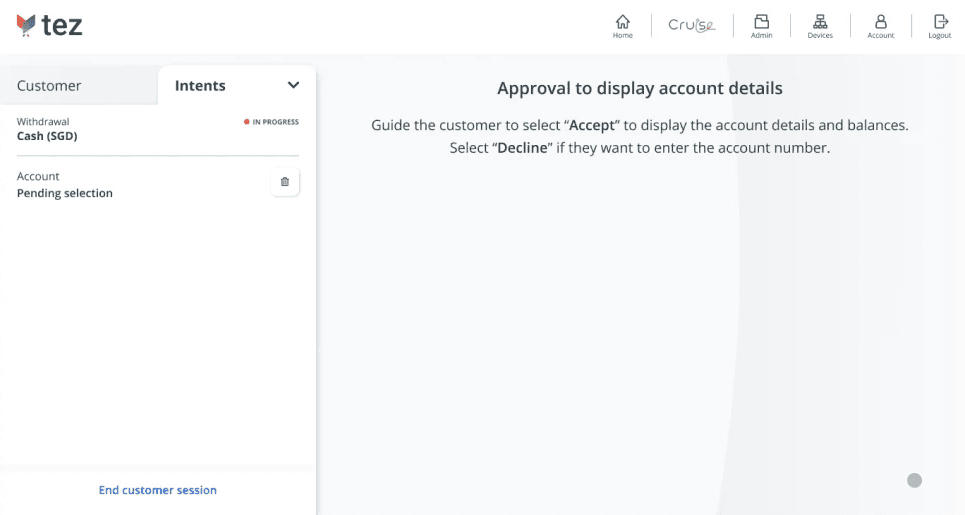
Designing for any level of experience
With on-screen prompts, tellers can execute transactions regardless of their level of knowledge or experience.

04.
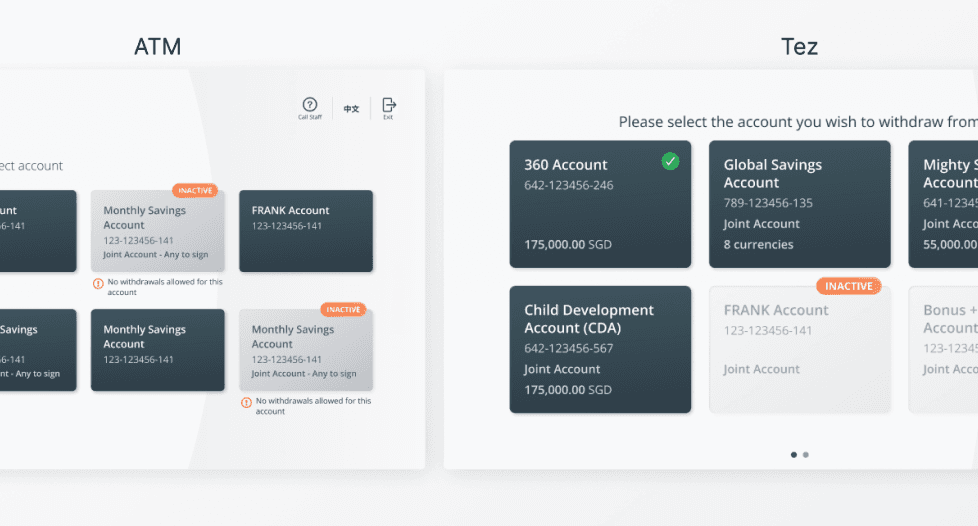
Building on what customers already know
Aligned with the ATM design team to adopt a shared visual language, reducing the learning curve for customers who already knew OCBC screens.
05.
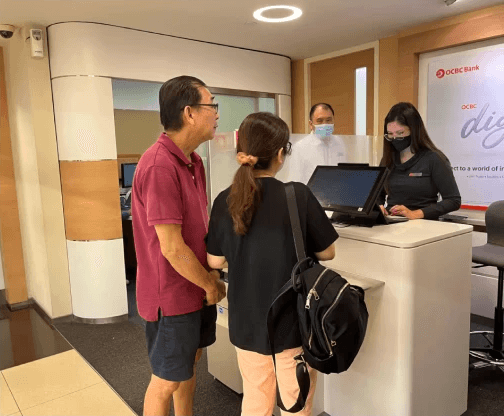
Making the transition feel less like a loss
Tellers had years of muscle memory to unlearn. Training modules and on-the-job pilots gave them room to relearn at pace before the full rollout demanded it.


USABILITY TESTING
Low-fidelity prototypes were tested weekly with stakeholders throughout. High-fidelity rounds brought in tellers and customers, including elderly and less-abled users, to catch breakpoints before the pilot launch.


IMPACT
SGD $2M in operational savings, with regional rollout plans already in motion.
Launched at two pilot branches in July 2024. Savings came from error reduction and faster processing across 40 previously manual workflows. A new system-oriented authentication model was introduced, with projected savings expected to grow significantly at scale. Success at the pilots has since spurred plans for regional rollout.
REFLECTIONS
Digital transformation is really about getting people to let go
Helping tellers unlearn workflows they'd trusted for years was harder than designing the screens. The system had to be intuitive enough that the transition didn't feel like a loss.
The finding that changed the brief
I assumed customers would prefer self-service if it were available. The research said otherwise. People chose to come in even when they didn't have to, because the teller made them feel safe. That reframed everything.